I help people understand why some brains recover from surgery, illness, and life, and others don't. It starts with one concept most doctors never mention.
01, The Concept
Think of your brain like a phone battery. A full charge handles anything, a long day, background apps, unexpected calls. But what if your battery was already at 12% before the day even started?
That's what happens before surgery, during illness, through hormonal shifts, or after years of chronic stress. Your brain's reserve, its ability to absorb stress and still function, quietly determines whether you bounce back or break down.
How much neurologic stress can this brain absorb right now, and how quickly can it recover when surgery, anesthesia, or illness pushes it past that threshold?
This is what the Neurologic Stress & Recovery Index™ (NSRI™) was built to answer.
The NSRI™ quantifies the brain's capacity to absorb and recover from neurologic stressors, measuring reserve and recovery dynamics before injury occurs. It assesses 5 evidence-based domains: cardiometabolic health, medication and pain burden, sleep and circadian health, lifestyle factors, and brain/social health. These aren't abstract concepts, they're the modifiable factors that determine whether your brain is cleared for surgery or genuinely ready for it.
02, In 60 Seconds
One minute. One shift in how you think about surgery, recovery, and your brain.
03, The Book
The Deep Dive
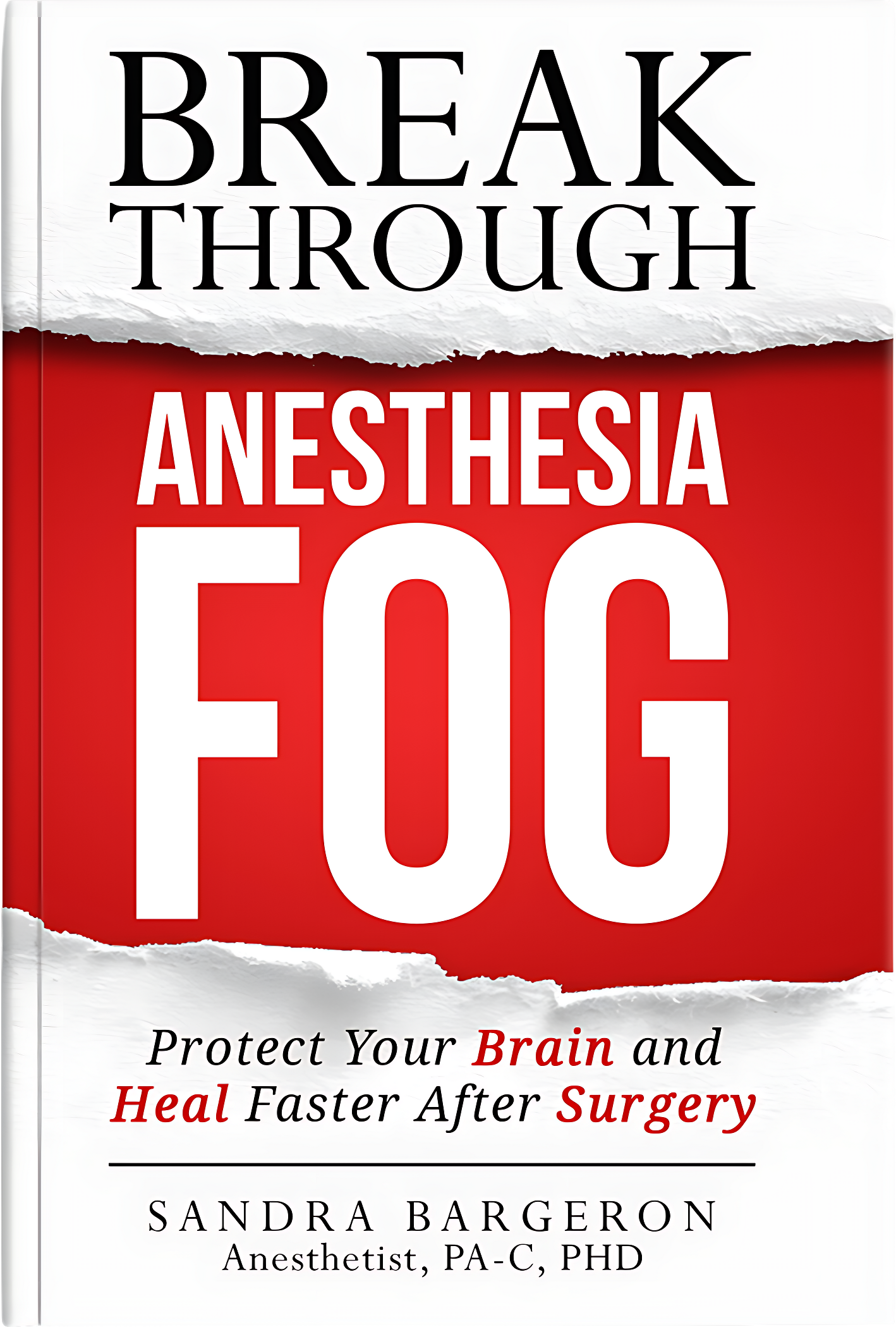
This isn't a "tips and tricks" guide. It's the first book to connect neuroinflammation, hormonal shifts, methylation, autonomic dysfunction, and gut health to how your brain handles anesthesia, and what you can do about it before you ever reach the operating room.
Written for patients who want to understand their own biology, and practitioners who want to know what's been missing from preoperative care.
Get the Book04, Work With Me
I work with a limited number of individuals who are ready to build real neurologic resilience, not just get cleared.
Group Program
The foundational first step. Your gut-brain axis is the gateway to neurologic resilience, and for most people, it's where recovery begins. This guided group program rebuilds the connection that stress, medications, and modern life have disrupted.
Learn morePrivate · Application Required
For complex cases, upcoming surgery, chronic illness, stalled recovery, or neurologic concerns that need a personalized, systems-level approach. Your session begins with a comprehensive NSRI™ assessment and personalized protocol design. Limited availability. Application reviewed to ensure fit.
Apply now06, The Podcast
Deep conversations on neurologic resilience, surgical preparation, and the science your doctor isn't talking about. A Beyond Brain Health Podcast hosted by Sandra Bargeron, PA-C, CAA.
07, The Research
Each article is peer-reviewed, research-backed, and written to help you understand what's actually happening inside your brain before, during, and after surgery.
By Sandra Bargeron, PA-C, CAA. Physician Assistant-Certified and Certified Anesthesiologist Assistant, writing from 22 years of clinical experience in the…
Read the article → Anesthesia RecoveryBy Sandra Bargeron, PA-C, CAA. Founder of Beyond Brain Health™ and creator of the Neurologic Stress & Recovery Index™ (NSRI™).…
Read the article → Neuro ResilienceA stress test for your brain — the first assessment designed to measure how well your brain can handle surgery…
Read the article → Neuro ResilienceCognitive assessments tell you what’s already changed. The Neurologic Stress & Recovery Index™ measures what can still be strengthened —…
Read the article →